The three UK VAT rates for 2026/27 — 20%, 5% and 0% — explained with real examples of what falls into each.
Standard rate: 20%
Applies to most goods and services by default — this is the rate to assume unless something specifically qualifies for a lower rate.
Reduced rate: 5%
Covers a defined list of specific items — domestic energy is the most commonly encountered example, along with certain mobility aids and a handful of other categories set out by HMRC.
Zero rate: 0%
Genuinely different from being VAT-exempt — zero-rated goods (most food, children’s clothing, books) are still technically within the VAT system, meaning a VAT-registered business can still reclaim VAT on related costs, unlike fully exempt supplies.
Do you need to register?
VAT registration becomes compulsory once your taxable turnover crosses the registration threshold in any rolling 12-month period — worth tracking this proactively rather than discovering you’ve crossed it after the fact.
Work out VAT on your own figures with the Payslp VAT calculator.
The rates side by side
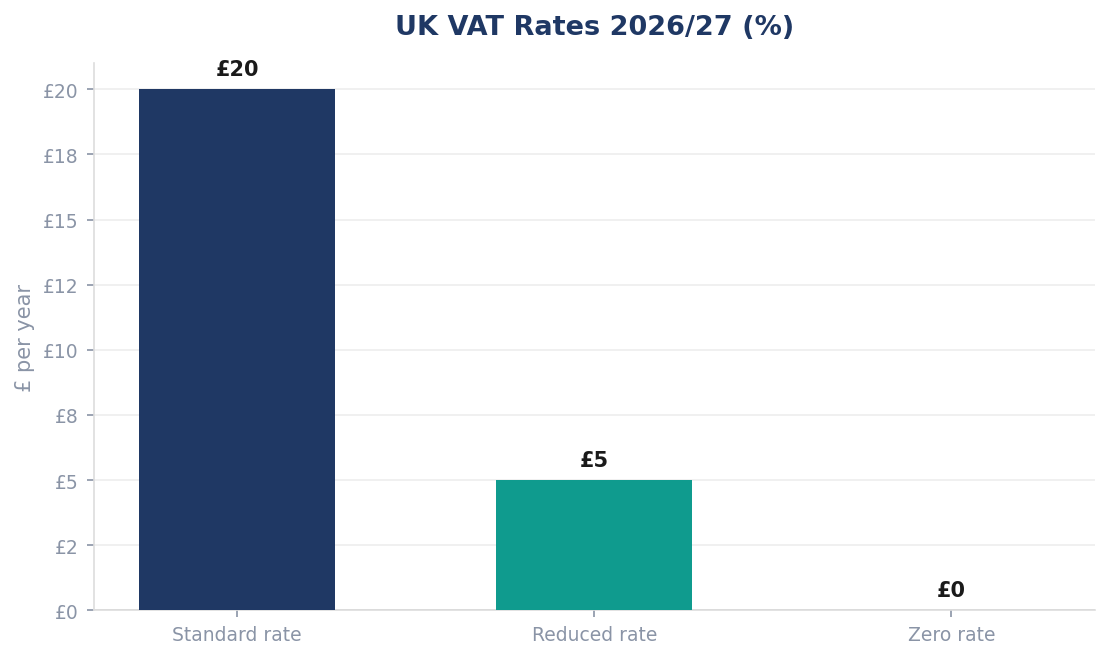
Getting VAT classification wrong — charging the standard rate on something that should be zero-rated, or vice versa — is a common, costly mistake, worth double-checking against HMRC’s official guidance for anything genuinely ambiguous.
Frequently asked questions
What happens if I charge the wrong VAT rate?
You may owe HMRC the correct amount regardless of what you charged the customer, or need to reissue invoices — worth getting classification right from the outset rather than correcting it later.