Employer National Insurance, pension contributions and on-costs — what a new hire really costs a UK small business beyond gross salary.
The gap between salary and real cost
A £30,000 salary doesn’t cost a business £30,000 — Employer National Insurance and minimum auto-enrolment pension contributions both add to the true cost, often pushing the real figure noticeably higher than the headline salary.
What to actually budget for
Employer NI, pension contributions, and often-overlooked extras like recruitment costs, onboarding time, and equipment all belong in a genuine cost-of-hire calculation — not just the salary line.
Why this matters for pricing decisions
Understanding the true cost properly is essential before setting prices or taking on new work that depends on additional headcount — underestimating it is one of the more common ways small businesses squeeze their own margins without realising.
Work out the true cost of your next hire with the Payslp Employee Cost calculator.
A worked example
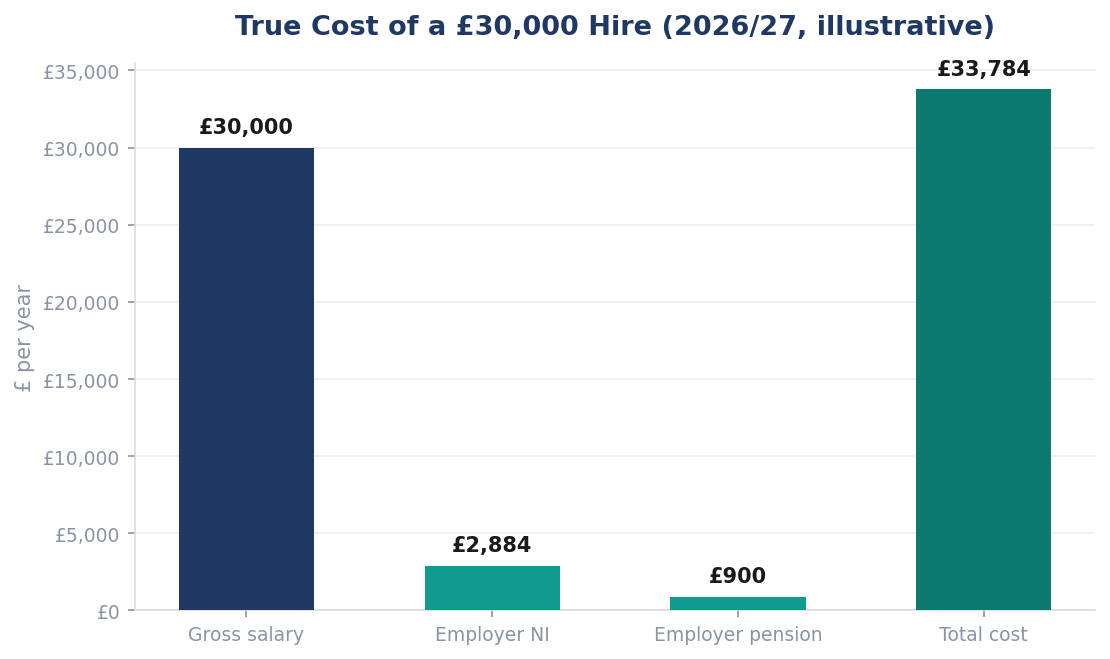
Notice that the true cost of this illustrative £30,000 hire is meaningfully above the headline salary once Employer NI and minimum pension contributions are added — a gap that’s easy to underestimate when quickly budgeting for a new role.
Frequently asked questions
Does Employer NI apply to every employee?
It applies above the Secondary Threshold, with some reductions available for certain employee categories like apprentices under 25 or employees under 21 — worth checking whether any reduction applies to your specific hire.