Earn between £100,000 and £125,140 and your effective tax rate on that slice isn’t 40% or 45% — it’s 60%. This genuinely surprises people, and it’s one of the strangest quirks in the UK tax system.
Why it happens
Your Personal Allowance tapers away once you earn over £100,000 — you lose £1 of allowance for every £2 you earn above that line, until it’s gone entirely at £125,140. So on top of paying 40% higher-rate tax on that income, you’re also losing tax-free allowance, which pushes the real marginal rate to roughly 60%.
The legitimate ways around it
Pension contributions and salary sacrifice both reduce your “adjusted net income” for this calculation — if that brings you back under £100,000, you avoid the trap entirely on that portion, while still getting full tax relief on the contribution. It’s one of the few points in the tax system where paying more into a pension has an outsized, genuinely worthwhile benefit.
Model your own position with the Payslp salary calculator and the budget planner.
Seeing it visually
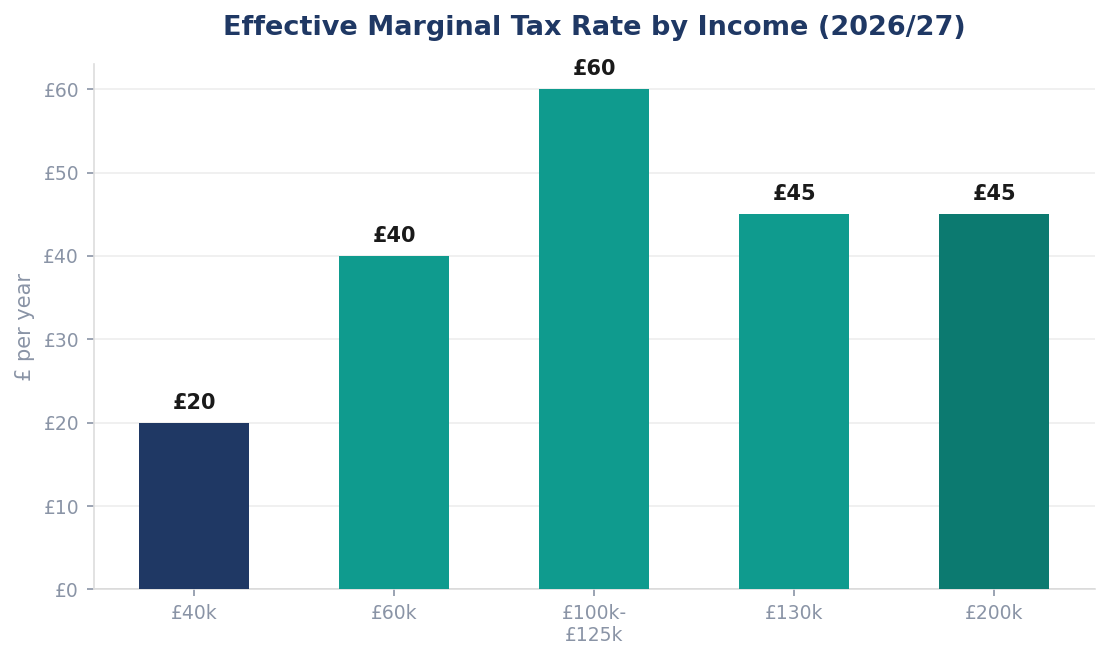
The chart shows how the effective marginal rate spikes specifically within the £100,000–£125,140 band, then drops back down to the standard 45% additional rate once the Personal Allowance has fully disappeared.
Frequently asked questions
Is this an official tax rate?
No — there’s no separate “60% band” published by HMRC. It’s the combined effect of the 40% higher rate plus the Personal Allowance taper, which together produce an effective 60% marginal rate on that specific slice of income.
Does this affect National Insurance too?
No, National Insurance is unaffected by the Personal Allowance taper — this trap is purely an Income Tax effect.